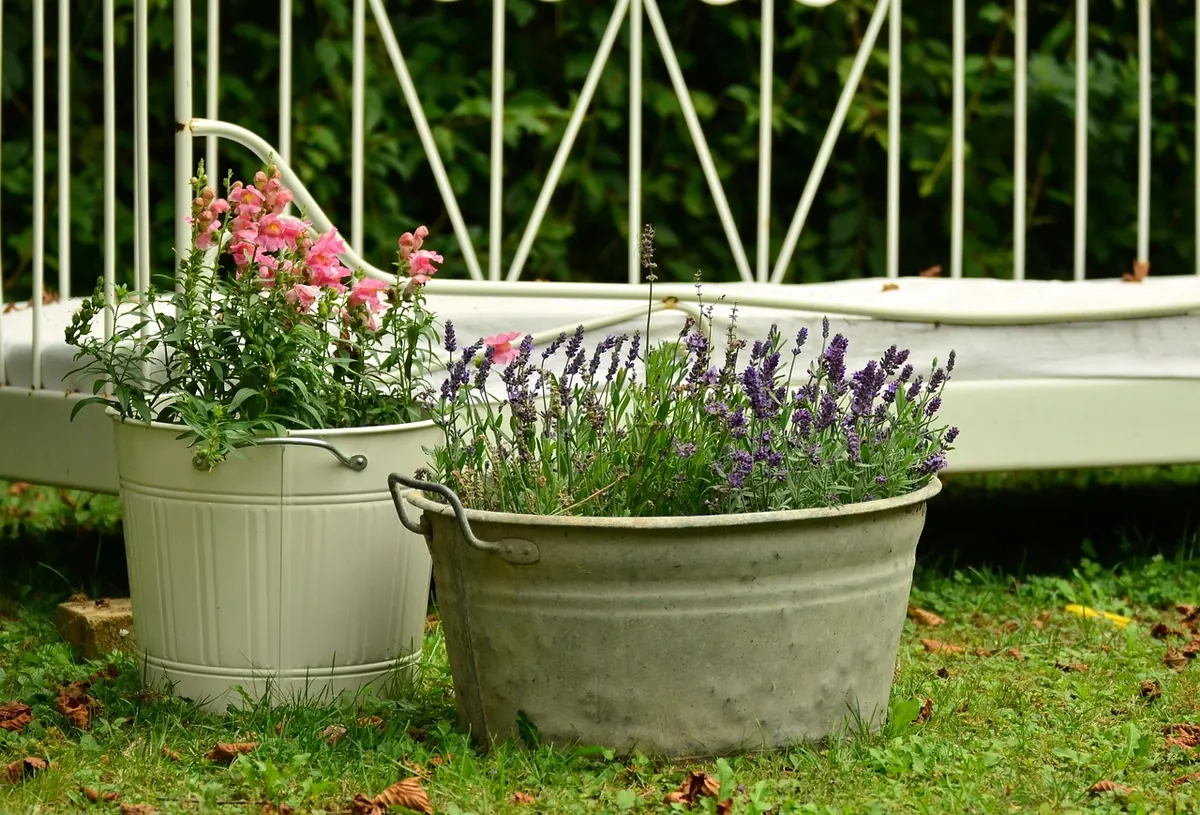
Wind off the fells, rain that arrives sideways, a short growing season — a Cumbrian patio can look like the least promising place to grow anything. Containers give you something a garden bed rarely does: complete control. You choose the compost, you decide how sheltered each plant is, and if a pot sulks in one corner you simply move it. Get the basics right and a modest paved space will keep you in salad, herbs and strawberries from late spring well into autumn.
Start with the wind, not the plants
Before buying a single pot, spend a week noticing how wind moves through your space. In most Cumbrian gardens the prevailing weather comes from the south-west, and coastal plots also get salt-laden gusts that scorch soft leaves. A pot in a gale dries out fast, tips over, and snaps stems that took you weeks to grow.
Find the calmest spot first. A wall facing south or west, the lee of a shed, or the internal corner where two boundaries meet will all do. A woven willow or reed screen fixed on the windward side takes the worst of it, but leave gaps — a solid barrier just creates turbulence on the other side. Then group your pots together rather than spacing them out. Clustered pots shelter one another, shade each other's compost in summer, and hold a slightly warmer, more humid pocket of air around the leaves.
Pots: bigger than you think, heavier than plastic
- Size: 30–35cm diameter for herbs, salad and radish; 45cm or more for tomatoes, peppers and compact courgettes; around 40 litres of compost for a crop of potatoes.
- Material: glazed ceramic and wooden half-barrels are heavy, stable and slow to dry out — ideal on an exposed site. Terracotta looks lovely but dries quickly and can crack in a hard frost. Plastic is cheap and light, which is exactly the problem in a gust.
- Drainage: plenty of holes, plus pot feet or bricks to lift the base off the paving so water can escape and slugs have less shelter underneath.
- Depth: short-rooted carrots still want 30cm of loose compost. Shallow bowls are fine for chives and thyme, hopeless for anything else.
Skip the old advice about a layer of crocks in the bottom. Broken pots don't improve drainage; they just raise the waterlogged layer closer to your plant's roots. Good compost and free drainage holes do the job.
Compost, feeding and all that rain
Use fresh, peat-free multi-purpose compost and resist the temptation to bulk it out with garden soil. Soil compacts in a pot, drains badly and brings in weed seed and slug eggs. For plants that will live in the same container for years — blueberries, herbs like rosemary, small shrubs — John Innes No. 2 or 3 holds its structure for longer. Mix in a handful of grit or perlite per bucketful to keep it open through a wet Cumbrian winter.
Heavy rain leaches nutrients straight out of a pot, and Cumbria gets plenty of heavy rain. Start liquid feeding as soon as flowers or fruit appear, roughly weekly, with a tomato-type feed for fruiting crops. Salads and leafy herbs need less; a weaker dose every fortnight is enough.
And don't trust the rain to water your pots. Leaves act like an umbrella, shedding water away from the rim, so a downpour can leave the compost underneath bone dry. Push a finger in to the second knuckle before you reach for the can. On a warm, windy day a big tomato pot may need watering twice.
Easy crops for a first season
Pick plants that forgive a missed watering and shrug off wind.
- Salad leaves and rocket: sow thinly in a wide pot and cut rather than pull. The plants regrow two or three times, which is far better value than a supermarket bag.
- Herbs: chives, mint, thyme, oregano and rosemary are tough and wind-tolerant. Keep mint in its own pot — it will smother anything beside it.
- Radish and spring onions: ready in weeks, and quick enough to slot in before or after another crop.
- Dwarf French beans and mangetout peas: compact varieties crop heavily in a large pot and cope with a breeze if given a few short canes.
- Chard: keeps producing through cool weather when other leaves have given up.
- Cherry tomatoes: trailing types such as 'Tumbling Tom' spill over the rim and need little staking. Start them indoors in April and put them out in June once the nights have warmed.
- Strawberries: three plants in a 30cm pot will give you a decent handful each week in early summer.
- Potatoes: a 40-litre pot and three seed potatoes give a surprisingly good return, and you can tip the whole lot out to harvest.
Planting up and the first few weeks
- Fill the pot to about 3cm below the rim and firm the compost lightly with your fingers — not your boot.
- Water the compost before you plant, so the roots go into damp ground rather than dry.
- Set plants at the same depth they were growing before, except tomatoes, which can be buried up to their first pair of leaves.
- Water in gently to settle the compost around the roots.
- Top with a 2cm layer of gravel or bark. It slows evaporation, keeps rain from splashing compost onto leaves, and makes life harder for slugs.
Slugs are the one thing a wet Cumbrian summer guarantees. Night patrols with a torch work better than anything else, and a beer trap or two will cut the numbers. Nematode treatments are effective once the soil has warmed in late spring. Copper tape loses its punch when everything is permanently damp, so don't rely on it alone.
Keep the watering can close to the pots. A container garden twenty paces from the tap gets watered far less often than one you walk past with a full can in your hand.
A realistic first season
Don't try to fill the whole patio at once. Two large pots of cherry tomatoes, one trough of cut-and-come-again salad, one pot of herbs and one of strawberries is a genuinely useful start, and it takes an afternoon. Sow a fresh pinch of salad seed every three weeks from April to August so you never face a glut followed by a gap, and note where the wind hits hardest so you can shuffle the lightest pots to safety before autumn gales arrive.
Next spring you'll know which corner holds the sun, which pot dries out first and which crop was worth the space. That knowledge is worth more than any gadget, and it only comes from getting your hands dirty.
Photo: congerdesign / Pixabay