A community growing group usually starts with a conversation rather than a plot. Two or three people in a village hall kitchen, grumbling about the price of a decent tomato. A parent wondering what could be done with the scrubby grass behind the school. In Cumbria the obstacles are real enough: land often belongs to someone else, the season is short, and a June gale off the fells can flatten a row of beans overnight. None of that is fatal. What follows is roughly the order in which things work, based on how groups in Kendal, Wigton, Ulverston and plenty of smaller places have made a go of it.
Start with people, not land
It is tempting to go looking for a field first. Don't. Land without people is just a field, and committees formed around a piece of ground tend to fold the first time the ground gets awkward.
Call a meeting instead. A back room at the pub, the village hall, the church room, a table at the school fair. Put a notice in the parish magazine and on the local Facebook group two weeks beforehand. Then ask four questions: who wants to grow, who wants to organise, who owns a van or a trailer, and who knows anything about drainage.
Those four answers shape everything. If most people want a small plot of their own for potatoes and onions, you are running an allotment site. If most want to turn up on a Saturday and share the work, you are running a community garden. Many groups end up doing a bit of both, with a row of private plots along one side and shared beds for herbs, soft fruit and anything that needs constant attention.
Finding land in Cumbria
Write to the clerk of your parish or town council first. They know what they own, what is sitting idle, and which fields have a water supply already. Ask about land that is not currently an allotment as well as land that is.
Beyond that, places worth asking include:
- Church land held by a PCC, sometimes available for a very low rent
- Disused school grounds, old chapel yards and closed railway land
- Housing association or large estate land, especially near new developments
- A corner of an existing allotment site that is under-used
- Utility companies, who own wide buffer strips around reservoirs and treatment works
- A farmer with an awkward paddock, a wet corner field or a strip beside a track
Before you fall in love with a site, walk it properly. Take a spade.
- Water. Is there a standpipe, a trough, a stream you are allowed to use? Without water on site, someone will spend their summer carrying cans in a wheelbarrow.
- Access. Can a trailer of manure or a delivery lorry reach the gate? Can a wheelchair or a pushchair get in?
- Drainage. Heavy Cumbrian clay stays wet until May. A gentle slope with good drainage will save you a year of misery.
- Light. Most vegetables want a good six hours of direct summer sun. Check what the trees at the boundary will do in ten years.
- Soil. Dig a few holes. If the land has been industrial, had railway sidings or old mine workings on it, get the soil tested before anyone grows food there. Take advice if you are unsure.
- Boundaries and security. Who else uses the lane? Is there a gate you can lock? What happens when the neighbouring field is sprayed or muck-spread?
The paperwork, briefly
Even the friendliest arrangement needs writing down. A short lease or licence is usually better than a long one at the start — three to five years with a break clause gives you room to move if the group changes. Set out clearly who insures what, who pays the water bill, who repairs the gate and what notice either side must give.
You will also need public liability insurance, a bank account with two signatories and a simple constitution. Model constitutions are widely available, and your local council for voluntary service or rural community council can point you towards them. If there are children on site, think about safeguarding and who is responsible.
This is one area where it genuinely pays to get proper advice — from a solicitor, or from the community foundation or rural support organisation covering your part of the county. Do not sign a ten-year lease on the strength of a helpful conversation with someone who does not own the land.
Recruiting and keeping volunteers
Posters at the school gate and the GP surgery still work. So do the parish magazine, the church newsletter, the chip shop window, the WI, Men's Sheds, U3A, Scout and Guide groups, and the local food bank. Say plainly what you need: two hours on a Saturday morning, or help building raised beds one weekend in March.
A few things make the difference between a group of forty names and ten people who actually turn up.
- Fix your session times and stick to them. Saturday, ten until twelve, every week, is easier to remember than "whenever we're free".
- Give people jobs they can finish. Nobody enjoys half-weeding a bed and being called away.
- Build waist-high raised beds for anyone who cannot kneel or bend easily, and keep paths wide enough for a wheelbarrow and a wheelchair.
- Split tasks into "session jobs" and "anytime jobs" so people who work shifts can still help.
- Rotate the roles. The person who runs the rota should not also be treasurer, water-carer and chief strimmer.
- Always make tea. It is not a joke; it is retention policy.
Laying out the space
Stand on the site with a mug of tea and a rough sketch before you plant anything. Put the things you will use most often near the gate: compost bays, a water butt, the shed, the tool store. Run the main path down the middle, not around the edge, and put in more paths than you think you need. Nothing kills enthusiasm faster than having to walk a full lap of the site to reach a tap.
On the wet, windy western side, plant a hedge or put up a netting screen. Hawthorn, blackthorn and rugosa rose all cope with exposure. A windbreak makes a surprising difference to what survives.
Draw up a simple plot agreement: how many hours a month are expected, that paths must be kept clear, that two work days a year are part of the deal, and what happens if a plot is left unworked for a season. Say it kindly, write it down, and apply it consistently. Ambiguity about abandoned plots is the single most common cause of arguments on shared sites.
Money, tools and the dull bits
Start-up costs are usually lower than people fear, but they are not zero. Grants are commonly available from the National Lottery Community Fund, the Cumbria Community Foundation, parish council precepts, supermarket community schemes and local businesses, and they tend to be modest — check current criteria before you plan around them. A plant sale or a harvest supper can fund a year's seeds.
Buy shared, not individual: a good strimmer, a rotavator if someone knows how to use it, a set of decent spades, a trailer. Keep the books simple but current, and photograph everything — grant reports want evidence, and a folder of pictures from the first summer is worth more than a page of description. If large sums or a lease are involved, take proper financial advice.
A rough rhythm for the first year
- January to March: finish the constitution, insurance and lease, order seeds, build beds, sort out water.
- April to June: plant out, weed hard, hold an open day and get local people through the gate.
- July to September: harvest, cook, preserve, run a show or a shared meal.
- October to December: tidy up, spread manure, cover bare beds, hold the AGM, plan next year.
Keeping it going past the first season
The groups that last are rarely the most ambitious. They are the ones with a boring core: someone who likes spreadsheets, a fixed weekly session, a plan that fits on one side of paper, and a person who remembers the milk.
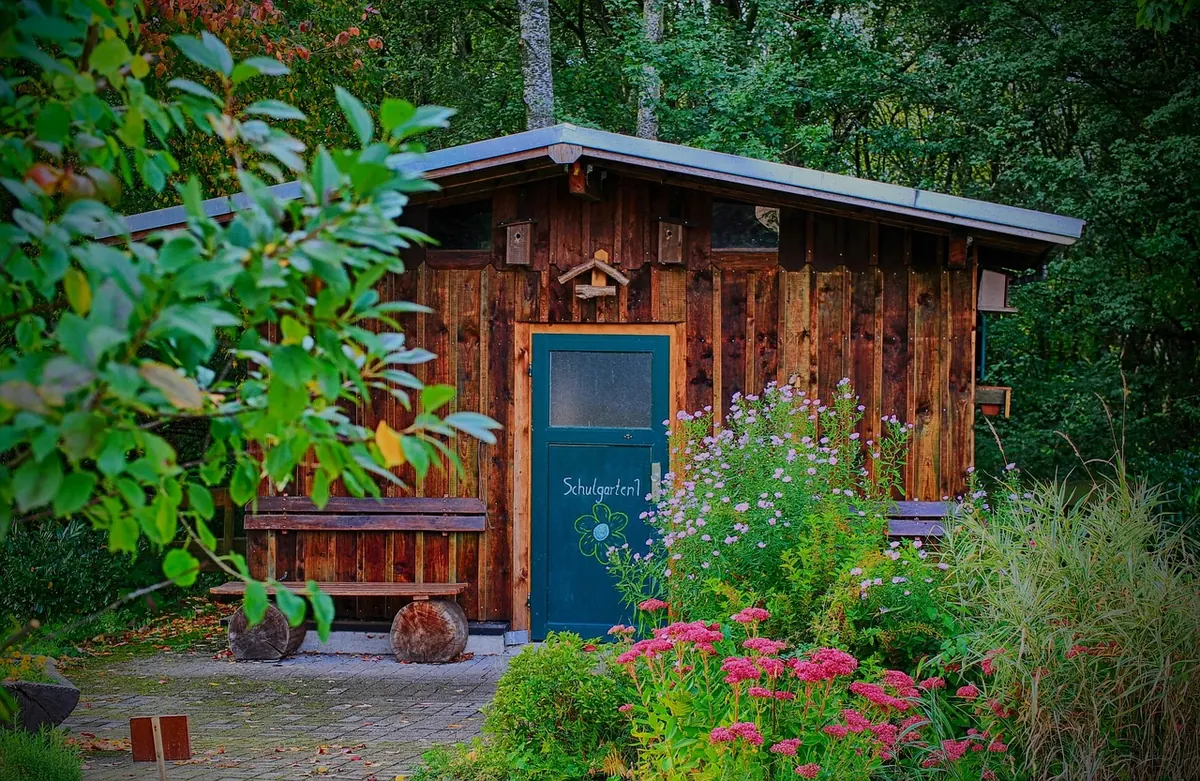
Mark the small things. The first new potatoes, the first tomato that actually ripens, the day the shed arrives. Invite people who are not members — a school class, a toddler group, a lunch club — to come and sit on the bench. And keep a note of what worked, because land in Cumbria sometimes changes hands, and a group with records and a good reputation can find a new site far more easily than one starting from scratch.
The weather will test you. That is guaranteed. Plant something wind-hardy, keep the kettle where you can reach it, and remember that a wet Saturday morning with six other people is still a better Saturday than most.
Photo: javallma / Pixabay